Resin · Guide
How to Color Epoxy Resin with Mica Powder and Alcohol Ink
Mix first, then tint. How mica powder and alcohol ink color epoxy differently, how much to add, and the mistakes that leave a soft or blotchy pour.
A first colored pour goes wrong in two predictable ways. Too much pigment or ink can leave the mix soft, and the wrong kind of colorant — a water-based paint, a craft dye, a guess from the kitchen — can haze or inhibit the cure. The reliable order is simple: mix the resin and hardener until they are even, then tint a little at a time. This is that walkthrough. It is not a brand ranking. If the colorant or the resin sheet disagrees with a step here, the sheet wins.
If you are still getting a clear pour to go hard, stay with the mixing guide and a plain test cup before you add color. A sticky colored piece is covered in why resin stays sticky.
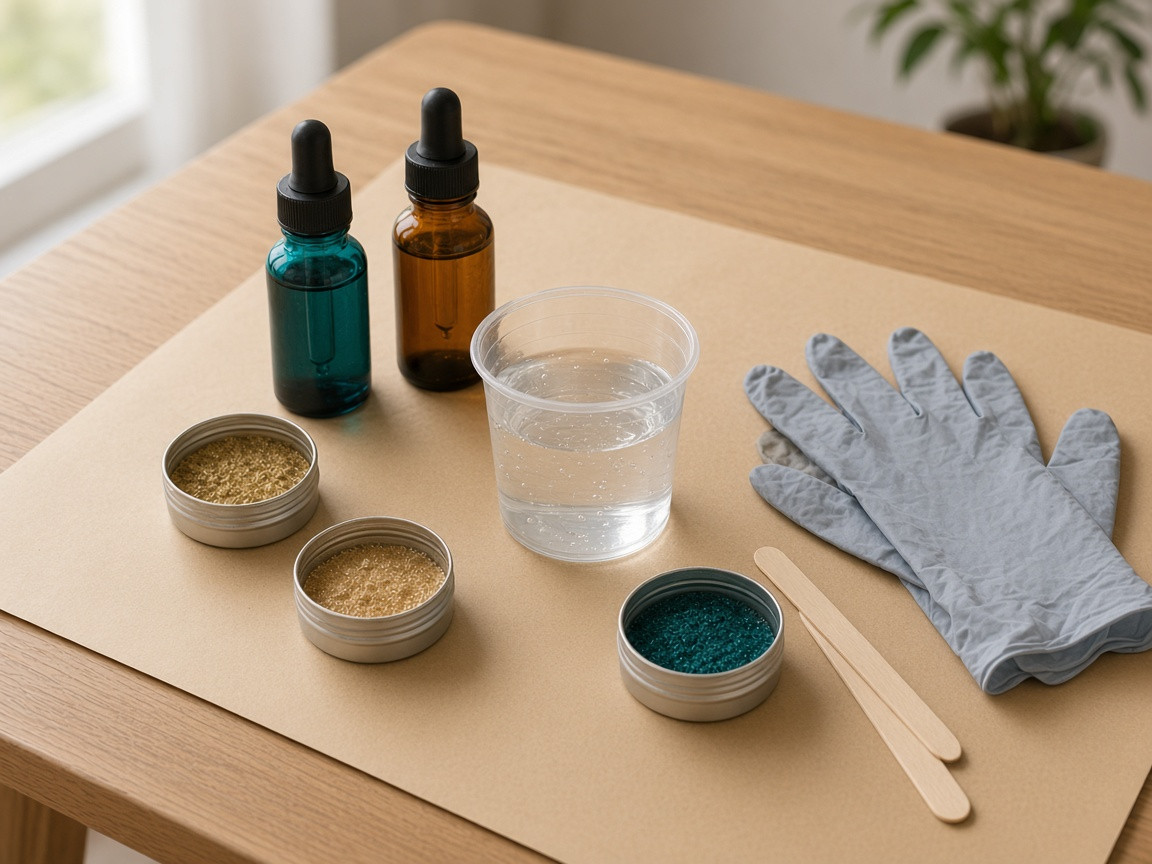
Mix first, then tint
The two parts of an epoxy have to meet in the ratio on the label, and they have to be stirred until the streaks are gone. Color goes in after that, in the second cup if you use one. Adding mica or ink to one side before the hardener arrives makes the ratio harder to read and is a common way to under-mix.
Stir the color in slowly. A fast whip adds the same bubbles you would then have to chase, which is a separate problem.
Work in a small test cup before you tint a whole project. A coaster mold holds more than you think once the powder starts to thicken the mix.
What mica does, and how much to use
Mica powder is a fine mineral pigment with a pearl or metallic sheen. In epoxy it can look translucent and shimmery at a light load, or more opaque and stone-like as you add more. It stays in the mix instead of dissolving, so clumps need to be broken up with the stick.
Start with less than you think. A toothpick tip, or a small pinch, is enough to test a cup. Many makers ask you to stay well under about 5% of the mixed volume; some products are stricter. The jar in your hand is the authority, not a blog percentage. A heavy load can thicken the resin, trap bubbles, and slow or stop the cure.
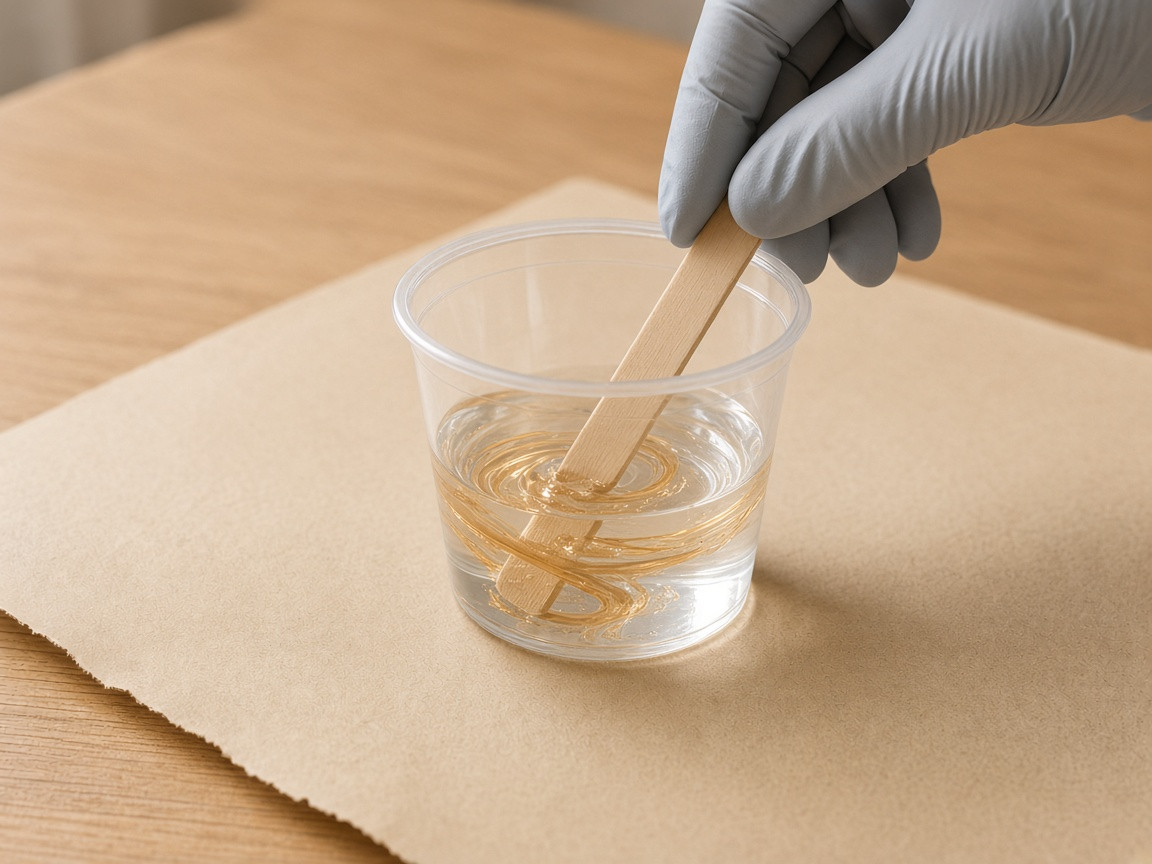
Stir until the powder is evenly distributed and you no longer see dry pockets on the stick or the cup wall. If you want a darker or more opaque color, add another small pinch and stir again, rather than dumping in a scoop.
Mica is a poor choice when you want a stained-glass, see-through tint. That look belongs to a transparent dye or an ink.
What alcohol ink does, and the limits
Alcohol ink is a transparent, alcohol-based color. In epoxy it stains the mix, or blooms across a wet surface, instead of sitting as a shimmering particle. A drop or two in a small cup is the usual starting point. The color is strong.
Too much ink adds extra solvent to the pour. That can increase bubbles, extend the cure, or leave the piece tacky. If a colored pour stays soft and the clear test cup from the same bottles went hard, the ink load is a likely cause.
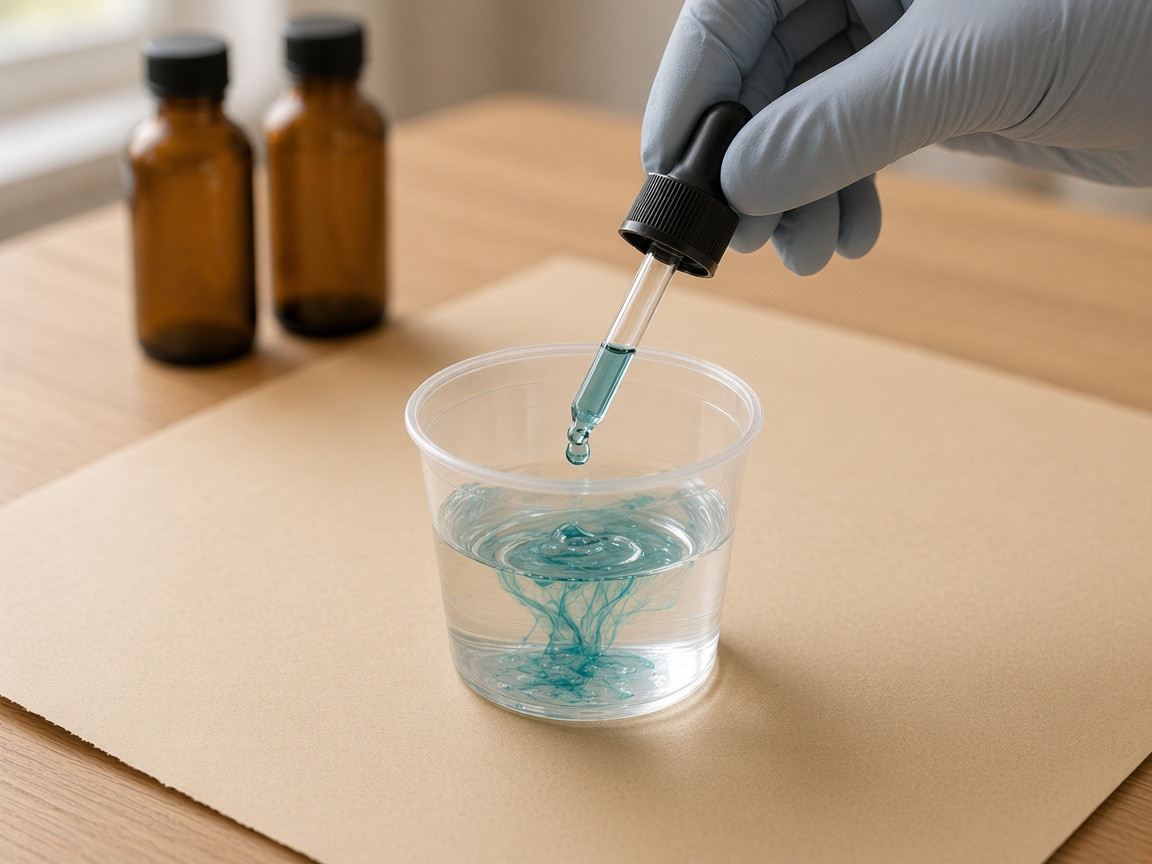
Alcohol inks are flammable. A heat gun or a torch, used in short passes for bubbles, is already a careful tool around plain epoxy. It is a worse idea over a freshly inked surface. Let the alcohol flash off, use less heat, or skip the flame on inked pours and rely on a slower stir and a longer wait for bubbles to rise.
Ink can migrate and leave dark rings or pale patches if you over-work a pour after the drops go in. For an even tint, stir the drops through the mixed resin in the cup, then pour. For a bloom or a cell-like pattern, drop ink onto the surface of resin already in the mold and then leave it alone.
Not every alcohol ink is sold for use in resin. If the bottle does not say it is compatible, treat it as a test at most, in a cup you can throw away.
What not to use
Water-based food coloring, watercolor, and many acrylic craft paints introduce water or binders that can haze the pour or interfere with the cure. Oil paint can inhibit epoxy. Glitter is not a colorant problem so much as a sinking and bubble problem; if you use it, keep the load modest and choose a size meant for resin.
A pigment paste or a resin dye made for epoxy is a third, useful option when you want solid color without mica’s shimmer. Use it the same way: after the mix is even, and in the amount the paste maker prints.
A side-by-side you can actually pour
If you want to see the difference, mix one small, correctly measured batch, split it into two cups, and tint one with a pinch of mica and the other with a drop of ink. Pour both into small molds and leave them. The mica cup should look pearly or metallic. The ink cup should look transparent, like stained glass. That single test teaches more than a long shopping list.
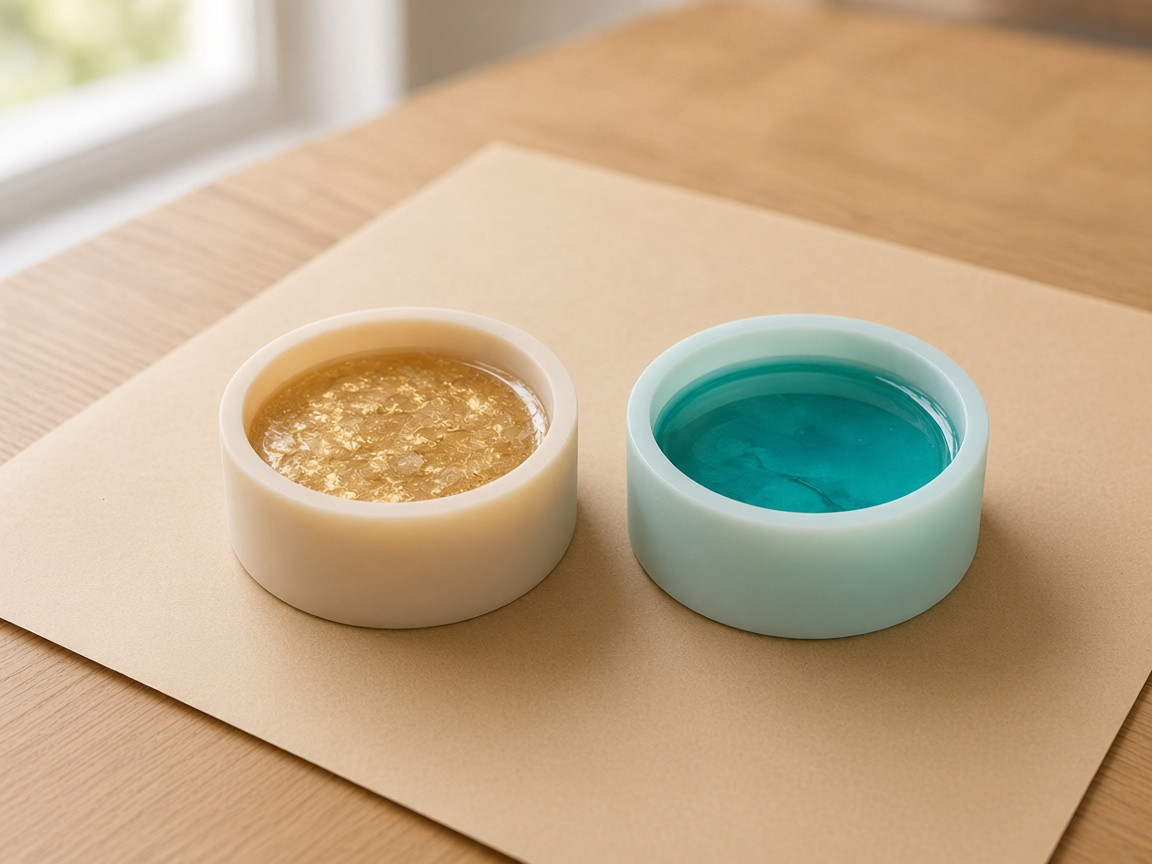
Keep both cups within the pour depth of your epoxy. Color does not change the fact that a coating resin is still a coating resin, which the buying guide and the coaster kit guide already cover.
A short shopping list, not a palette review
Supply
Mica powder for resin
A fine mica made for resin is the usual way to get a pearl or metallic pour. Start with a pinch in a test cup. A heavy scoop can thicken the mix and slow the cure.
Price: check Amazon. It changes with size, seller, and coupons. Castwick does not store a live price, star rating, or review count.
Amazon search: mica powder for epoxy resin
View current listings on Amazon (opens in a new tab)Affiliate link. A qualifying purchase may earn Castwick a commission.
Supply
Alcohol ink for resin
A resin-compatible alcohol ink gives a transparent tint or a surface bloom. A drop or two is enough for a small cup. Extra solvent from a heavy pour can leave the piece tacky.
Price: check Amazon. It changes with size, seller, and coupons. Castwick does not store a live price, star rating, or review count.
Amazon search: alcohol ink for resin crafts
View current listings on Amazon (opens in a new tab)Affiliate link. A qualifying purchase may earn Castwick a commission.
Tool
Graduated mixing cups
You still measure the resin and hardener first. Extra cups make it easy to split one mixed batch for a mica test and an ink test side by side.
Price: check Amazon. It changes with size, seller, and coupons. Castwick does not store a live price, star rating, or review count.
Amazon search: graduated resin mixing cups
View current listings on Amazon (opens in a new tab)Affiliate link. A qualifying purchase may earn Castwick a commission.
Safety
Nitrile gloves
Powder and ink both migrate. A disposable nitrile pair keeps mica and wet epoxy off your skin while you stir and pour.
Price: check Amazon. It changes with size, seller, and coupons. Castwick does not store a live price, star rating, or review count.
Amazon search: nitrile gloves for resin crafts
View current listings on Amazon (opens in a new tab)Affiliate link. A qualifying purchase may earn Castwick a commission.
Color will not stop a piece from yellowing in the sun. That is a light and formula problem, covered in why resin yellows.
Listings change. Castwick has not lab-tested these colorants. The Amazon links are searches, tagged for Associates, and the current offers on the results page are the ones that matter.